

change in action
Circular plastic ii
EMPOWERING COMMUNITIES TOWARDS SUSTAINABLE SOLUTIONS


Circular Plastics II builds on the first symposium by empowering communities to lead solutions to plastic pollution. Focused on local engagement and circular economy practices, the event highlights how collective action supports improved waste management and advances the UAE’s goal to eliminate plastic pollution by 2040.
partners


CIRCULAR PLASTIC I
SUSTAINABLE SOLUTIONS


In 2023, the UAE hosted COP28, drawing global attention to pressing environmental challenges, particularly the impact of plastic waste on ecosystems, climate, and human health. In response, the symposium encourages communities to adopt circular practices by keeping plastic within the economy through recycling and reuse, promoting a closed-loop system where materials are continuously repurposed rather than discarded.
partners

Waste 2 Wealth II
Special Topics for Interdisciplinary Practices
The second edition of Waste 2 Wealth at the University of Sharjah united students across disciplines to turn local waste into sustainable, market-ready solutions, showcasing how education and collaboration can drive innovation and transform waste into opportunity.


partners


Neda salmanpour
Architectural Designer

emile moughayar
entrpreneurship and youth manager

Mansi bavishi
make works uae coordinator | tashkeel

tawheed bashar
sustainability advisor | see institute

ahmed mokhtar zAin
manager creative hub | Base 39
Waste 2 Wealth
A Sustainability Shark Tank


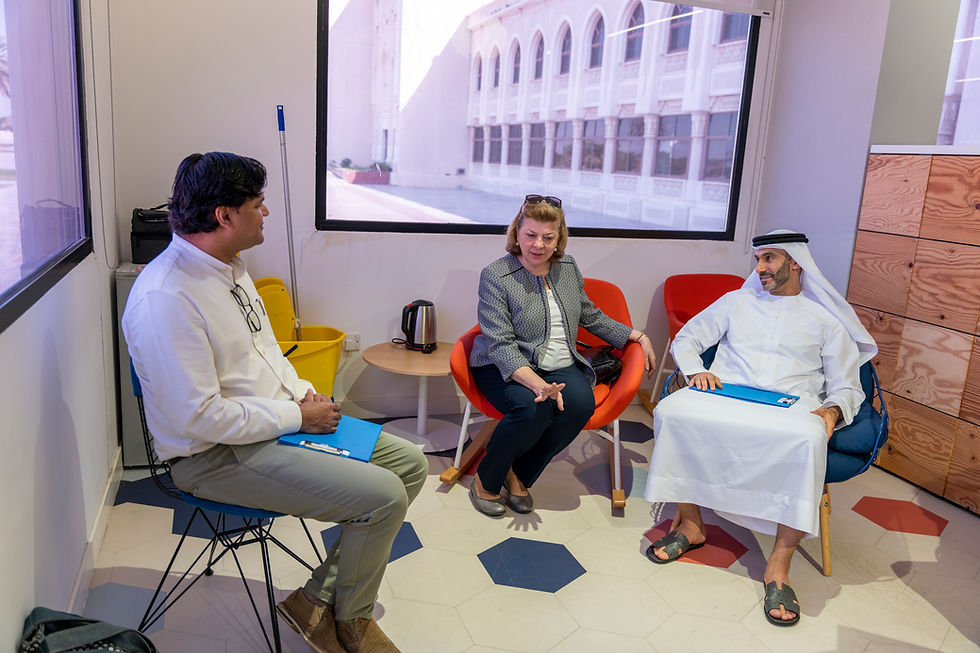


Waste 2 Wealth Shark Tank is an interdisciplinary project where students transform local waste into market-ready products. Combining regenerative design, circular economy principles, and strategic marketing, the initiative turns environmental challenges into sustainable economic and social value.
partners


Neda salmanpour
Architectural Designer

KHALID shafar
director and designer director


emile moughayar
entrpreneurship and youth manager
mohamad fanous
entrepreneur in residence
sahil abdul latif
curatorial coordinator
students' work


DESIGN DNA: Decoding Nature’s Intelligence at SPARK. 🧬♻️
DESIGN DNA: Decoding Nature’s Intelligence at SPARK
A showcase of innovation where student research meets real-world application. From intricate posters to physical prototypes, this exhibition explores how nature’s blueprints can drive the future of circular design.
Seeing the students present their sustainable solutions to the Dean and the jury highlights the power of interdisciplinary collaboration between Interior Design and Visual Communication.


MOMENTS IN MOTION
Moments in Motion


Sustainability
